A Comprehensive Vedic Astrological Analysis of the Total Lunar Eclipse in Leo, March 3, 2026
The celestial configuration manifesting on March 3, 2026, represents one of the most transformative astrological epochs in recent decades, characterized by what practitioners describe as the “Great Twist Alignment”. This total lunar eclipse, occurring within the sidereal constellation of Leo and the specific lunar mansion of Purva Phalguni, serves as a profound catalyst for the recalibration of individual and collective identity. In the Vedic tradition, a lunar eclipse or Chandra Grahan is not merely an astronomical shadow; it is a perturbation of the Manas (the lunar mind), a moment when the subconscious “Blood Moon” reveals the limitations of the ego and the necessity of spiritual detachment. The year 2026 is structurally significant as it features four eclipses, yet the March event is the only one visible across the Indian subcontinent, thereby magnifying its ritualistic, religious, and psychological impact for the region.
Technical Parameters and Observational Mechanics
The precision of Vedic astrology relies upon the exact timing of the Grahana (eclipse), which dictates the calculation of the Sutak Kaal (period of spiritual impurity) and the subsequent remedial protocols. The March 3 eclipse occurs during the Shukla Paksha Purnima (full moon) of the Phalguna month, coinciding with the festival of Holi, a rarity that complicates the standard festive observances.
Precise Timing and Visibility
The eclipse follows a rigorous progression based on Indian Standard Time (IST), with its influence beginning long before the shadow is visible to the naked eye. The total duration of the eclipse is significant, with the total phase alone lasting approximately 58 minutes.
| Phase of the Lunar Eclipse | Time (IST) | Visibility and Ritual Relevance |
| Initial Penumbral Phase Begins | 01:42 PM | Subliminal effects; not visible to the eye |
| Partial Eclipse Commences | 03:20 PM | Official start of the Grahana; visibility in East Asia |
| Totality Begins | 04:35 PM | Moon enters Earth’s umbra fully |
| Maximum Eclipse (Peak) | 05:04 PM | Peak intensity; reddish “Blood Moon” hue |
| Totality Concludes | 05:33 PM | Moon begins exiting the umbra |
| Moonrise in India (General) | 06:20 PM – 06:30 PM | Visibility begins for Indian observers |
| Partial Eclipse Concludes | 06:47 PM | End of religious restrictions and Sutak |
For practitioners in India, the event is categorized as a “moonrise eclipse.” This indicates that by the time the Moon ascends the eastern horizon, the total phase has passed, and the observer witnesses the final partial stages. The visibility varies significantly across longitude, with eastern cities experiencing a longer duration of the visible eclipse compared to western regions.4
| City / Location | Moonrise Time (IST) | Visibility Duration of Eclipse |
| Guwahati / Northeast India | 05:45 PM | ~62 Minutes (High Visibility) |
| Lucknow | 06:02 PM | 45 Minutes |
| Delhi | 06:22 PM | 25 Minutes |
| Chennai | 06:21 PM | 26 Minutes |
| Hyderabad | 06:26 PM | 21 Minutes |
| Mumbai | 06:35 PM | 12 Minutes |
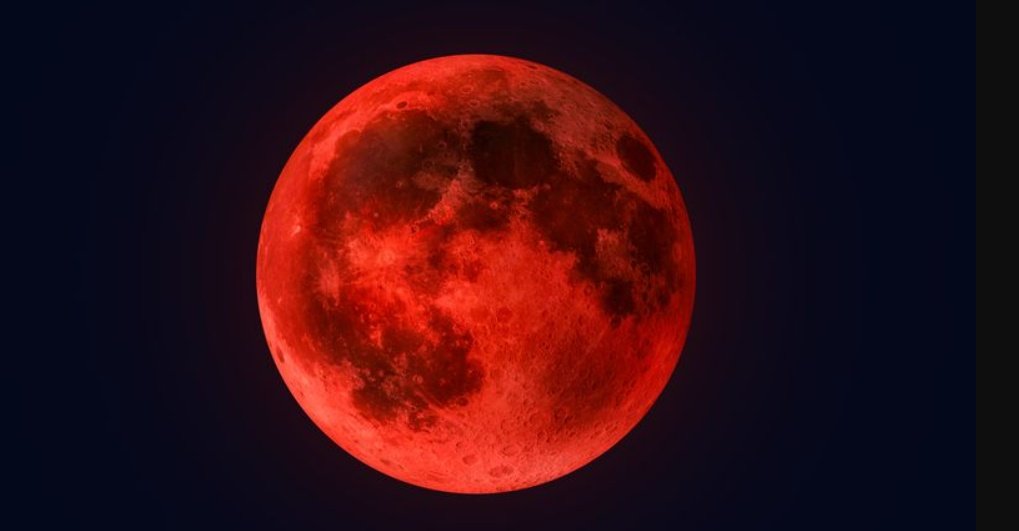
The appearance of the Moon as a “Blood Moon” is a result of the refraction of sunlight through the Earth’s atmosphere, which filters out blue light and allows longer red wavelengths to reach the lunar surface. This phenomenon is interpreted in mundane astrology as a period of heightened emotional heat, where “red” symbolizes both the passion of creativity and the volatility of anger.
The Saros Cycle and Historical Continuity
This eclipse belongs to Lunar Saros series 133, a family of eclipses that originated in May 1557. Historically, this series is associated with the aftermath of dramatic shifts in authority and the slow, difficult process of consolidation. The 2026 manifestation focuses on “visibility through consequence,” where the results of actions taken over the previous decades finally become impossible to ignore. It suggests a time when lived experience carries more weight than abstract ideology, forcing a reconciliation with systemic failures in both personal and professional lives.
The Leo-Aquarius Axis: Sovereignty Versus Connectivity
The central astrological tension of this eclipse lies in its positioning within the Leo-Aquarius axis. In the sidereal zodiac, the Moon is situated at approximately 18 degrees of Leo, conjunct the south node, Ketu, while the Sun is in Aquarius, conjunct the north node, Rahu. This creates a powerful karmic tug-of-war between the drive for personal sovereignty (Leo) and the necessity of collective responsibility (Aquarius).
Leo: The Eclipsed King
Leo, the sign of the Lion, is ruled by the Sun and represents the heart, the ego, royalty, and the individual’s creative spark. When an eclipse occurs here, the “light of the ego” is momentarily extinguished. The presence of Ketu, the planet of moksha and detachment, in Leo alongside the Moon creates an “Eclipse Affliction” or Grahan Dosha. This alignment suggests that the standard Leo pursuit of recognition and dominance is being fundamentally challenged. It is a period for “inner solitude,” where the individual must confront who they are when the external validation of their titles and achievements is removed.
Aquarius: The Disruptive Network
Opposite the eclipse, the sign of Aquarius is the host of an extraordinary “Panchagrahi Yuti” or five-planet stellium. Between February 23 and March 2, 2026, the Sun, Rahu, Mars, Mercury, and Venus all converge in this sign, casting an intense collective aspect toward the eclipsed Moon in Leo. Aquarius, an air sign ruled by Saturn and Rahu, represents evolution, revolution, and the breaking of old establishments
The interactions within this stellium are volatile. The Sun-Rahu conjunction (Surya-Rahu Yuti) creates confusion around authority and leadership, while the Mars-Rahu conjunction (Mangal-Rahu Yuti) fuels impulsive, reformative actions that can manifest as societal unrest. Mercury’s presence with Rahu induces a state of “disruptive thinking,” where wild ideas may take root, and communication becomes both futuristic and scattered.
Purva Phalguni Nakshatra: The Distribution of Fortune
The Moon is specifically located in the lunar mansion of Purva Phalguni at the time of the eclipse. This Nakshatra is ruled by Venus and is presided over by the deity Bhaga, the dispenser of fortune and legitimate enjoyment.
The Role of Bhaga
Bhaga represents the portion of the divine light that is allocated to individuals for their pleasure and prosperity. He is the guardian of inheritance and the distributor of marital bliss. Because the eclipse occurs in this star, there is a significant focus on “correcting imbalances” in relationships and financial structures. The energy of Purva Phalguni supports the rekindling of creative talents but warns against the misuse of luxury. During the eclipse, the “shadow” falling on Bhaga’s star indicates a “karmic audit” of how one has managed their pleasures and responsibilities. It is a time when the universe may redistribute fortune, taking from those who have been exploitative and rewarding those who have acted with Dharma.
Venusian Influence on Relationships
As Venus is the planetary ruler of Purva Phalguni, the eclipse heavily impacts love, marriage, and emotional attachments. It is predicted that “knots in old relationships” will surface, and “incomplete karmic patterns” with partners will demand resolution. The coincidence with Holi a festival of colors and love, underscores this theme, as the eclipse forces a “detachment from false attachments” even during a time of celebration.
The Panchagrahi Yuti: A Deep Dive into the Aquarius Stellium
The convergence of five planets in Aquarius creates a “force-multiplier” effect that dictates the global and individual response to the lunar eclipse.14 Unlike a standard stellium, this gathering includes both the Surya (Sun) and Rahu, creating an environment of “chaotic stress” and “unpredictability”.
Interaction Dynamics
The combined energy of these planets provides an opportunity to “break old shackles,” but the process is unlikely to be quiet.
| Planetary Pair | Core Manifestation | Potential Risks |
| Sun & Rahu | Ambition for unconventional leadership | Ego-based confusion; loss of status |
| Mars & Rahu | Intense drive for reform and revolution | Impulsive decisions; physical accidents |
| Mercury & Venus | Innovation in art, media, and technology | Scattered thoughts; unrealistic expectations |
| Sun & Mars | Heightened vitality and executive drive | Workplace power struggles; ethical testing |
Because these planets gather in Aquarius, the sign of the “Water Bearer” which signifies the pouring out of knowledge for humanity, the world may see “sensational headlines” in the media and sudden shifts in social networks. The impact of this stellium is particularly heavy in February and March 2026, leading to a collective feeling of being “tired without a clear reason” as the human nervous system reacts to heightened solar activity and planetary pressure.
Comprehensive Detailed Predictions for All Zodiac Signs
The following detailed analysis for the twelve Moon signs (Rashis) integrates the influence of the Leo lunar eclipse, the Aquarius stellium, and the overarching karmic themes of 2026.
Aries (Mesha Rashi)
For the Aries moon sign, the total lunar eclipse occurs in the fifth house, a sector primarily governing creativity, progeny, intelligence, and the fruits of past-life meritorious deeds (Purva Punya). This transit is particularly sensitive because the fifth lord (the Sun) is simultaneously under the intense pressure of the Aquarius stellium in the eleventh house.
Aries natives may experience a profound “emotional unrest” regarding their children or romantic partners. There is a risk of making “headless mistakes” or impulsive decisions in speculative markets, such as the stock exchange, driven by the volatility of the Moon-Ketu conjunction. The eleventh house stellium suggests that while there may be opportunities for financial gain through social networks, these are fraught with “ethical challenges” and “workplace power struggles”.
- Professional Impact: Career growth is possible if the individual remains adventurous yet grounded. Recognition may come through unconventional leadership, but the eclipse warns against “negative publicity” if public dealings are handled with arrogance.
- Mental and Emotional Health: The mind may feel scattered due to the “chaotic stress” of the Aquarius stellium. It is vital to avoid “ego-based confusion” in social circles.
- Remedy: Reciting the Gayatri Mantra or Om Namah Shivaya 108 times during the eclipse to stabilize the creative intellect. After the eclipse, offering white sweets to Goddess Lakshmi on Friday is recommended to pacify the Venusian ruler of the Nakshatra.
Taurus (Vrishabha Rashi)
Taurus natives encounter the eclipse in their fourth house, which governs the home, the mother, domestic peace, and overall emotional foundations. For Taurus, 2026 is a year of “stability versus disruption,” as they are naturally resistant to the erratic energy of the Aquarius stellium, which sits in their tenth house of career.
The eclipse may cause “old family issues” to resurface, potentially creating a “dark aura” or feelings of dissatisfaction within the home. There is a noted “emotional distance” from the mother or a loss of “inner peace” as the native struggles to balance professional demands with domestic responsibilities. The tenth house stellium suggests “visible progress” in career, but only if the native avoids “over-promising” and manages the “unsettled energy” of the workplace with their trademark patience.
- Professional Impact: Financial decisions and long-term plans hold better ground than in previous months. Taurus is one of the few signs that may benefit from the “Great Twist” by moving at a “steady pace,” while others are rushed.
- Mental and Emotional Health: Vulnerability to “insomnia” and “anxiety” is possible if domestic disputes are not handled with diplomacy.
- Remedy: Donating milk or rice on Monday to strengthen the Moon. Chanting the Moon mantra “Om Som Somaya Namah” during the eclipse period is essential to maintain mental stability.
Gemini (Mithuna Rashi)
For Gemini moon sign individuals, the eclipse manifests in the third house, the domain of communication, siblings, courage, and short-term travel. This is an intellectually stimulating yet “unsettled” period, as the planetary ruler Mercury is part of the five-planet stellium in the ninth house of higher learning and spiritual philosophy.
Geminis may find that their “decision-making ability” is clouded by incomplete information or “misunderstandings” with close associates. The eclipse can trigger a “clash of ideas” with siblings or neighbors, and travels may become sources of “frustration and stress” rather than relaxation. However, the ninth house stellium offers “opportunities through conversations” and potential progress in long-term plans if the individual remains “mentally alert”.
- Professional Impact: Excellent for those in media, writing, and communication, provided they avoid “gossip” and choose their words with extreme care.
- Mental and Emotional Health: “Restlessness” is the primary challenge. The native should avoid “wild ideas” generated by the Mercury-Rahu conjunction.
- Remedy: Maintaining silence (Mauna) during the eclipse to prevent verbal conflicts. Writing down insights after the eclipse ends to gain clarity from the “wave of insight” promised by this lunation.
Cancer (Karka Rashi)
As the moon is the planetary ruler of Cancer, this sign is “most affected” by the lunar eclipse, which takes place in their second house of wealth, family values, and speech. The eclipse affliction creates a “dark aura,” making Cancers feel “mentally weak” or physically exhausted.
Financially, this is a “sensitive period” where worries about expenses may settle in the mind. Cancers must avoid making “wrong financial decisions due to emotions” or “impulsive spending”. The eighth house stellium in Aquarius aspects the second house, suggesting that “shared resources,” taxes, or inheritances could undergo “sudden shifts”. This is a time for “spiritual purging” of old habits related to material security.
- Professional Impact: Hardships in a career may arise if the native reacts to “challenges from different parts of life” with too much sensitivity. Mars in the eighth house (exalted in early February) provides “energy and protection” but requires the avoidance of “unnecessary fights”.
- Mental and Emotional Health: High risk of “insomnia,” “anxiety,” and “mood swings”.
- Remedy: Chanting the Chandra Mantra or the simple “Hare Rama Hare Krishna” mahamantra. Offering milk to Lord Shiva and practicing meditation are specifically recommended to bring peace.
Leo (Simha Rashi)
Leo is the epicenter of the eclipse, as the lunation occurs in the first house of self, physical body, and personality. This is a “lifetime experience” for Leos, forcing a fundamental “emotional reset”.
Leos may experience “mental restlessness” or “overthinking,” and the presence of Ketu encourages a “separation from past attachments” to the ego. The seventh house stellium in Aquarius brings “acute impact” to partnerships and marriage. Disagreements and “miscommunication” with business partners or a spouse are likely, and the native may feel “shaky and insecure” in courtship matters. There is a specific warning against “ego clashes” with negative people who may try to make the Leo feel “inferior”.
- Professional Impact: “Pressure in professional life” is high. Enemies may become “active,” seeking to ruin the Leo’s “positivity and charm”.
- Mental and Emotional Health: Confusion and “suppressed tension” may surface. It is essential to “maintain patience and restraint” to avoid “hasty decisions” that cause later regret.
- Remedy: Chanting Surya Mantras and reciting the Aditya Hridya Stotram to strengthen the sun-ruled self. Performing a head bath after the eclipse and offering water to the Moon is traditionally advised.
Virgo (Kanya Rashi)
For Virgo moon sign natives, the eclipse transits the twelfth house of the subconscious, hidden expenses, isolation, and spiritual liberation. This is a “precise and grounded” eclipse for Virgo, who is concerned with “maintenance and repair”.
The twelfth house placement can increase “mental fatigue” and “subconscious anxiety,” with old matters or “suppressed feelings” suddenly disturbing the mind. The sixth house stellium in Aquarius highlights “work responsibilities” and “routines.” Virgos may see themes around them where “systems have become inefficient,” and they are called to provide the “quiet labor” to keep things functional while their own energy is low.
- Professional Impact: Work plans might “shift or feel delayed.” It is vital not to “overanalyze every situation” and instead take a “calm, step-by-step approach”.
- Mental and Emotional Health: Concentration and “mental clarity” may be affected. There is a need for a “physical and mental detox”.
- Remedy: Donating curd, rice, or white clothes is recommended. Chanting “Om Soumaya Namah” can reduce the stress associated with the twelfth house.
Libra (Tula Rashi)
Libra natives experience the eclipse in their eleventh house of gains, friendships, and social aspirations. This is a time of “creative boom” and “romance strengthening,” but it also brings “emotional confusion” regarding social circles.
Expectations from friends may not be fulfilled, leading to an “upset mind” or “distance” in group activities. The fifth house stellium in Aquarius creates “intense energy” in romantic and creative pursuits, potentially leading to a “financial windfall” or a “new partnership” in business. However, Libras must be careful of “misunderstandings” caused by “emotional sensitivity” and should remain “gentle in communication”.
- Professional Impact: Recognition and success through “progressive leadership roles” are possible. Financial opportunities may arise through “collaborative creativity”.
- Mental and Emotional Health: “Restlessness and lack of peace” in thoughts due to the Venus-Rahu conjunction.
- Remedy: Practicing “gratitude meditation” and chanting “Om Somaya Namah.” Spending quiet time in “prayer or reflection” is the most effective way to maintain balance.
Scorpio (Vrishchika Rashi)
For Scorpio moon sign individuals, the eclipse occurs in the tenth house of career, public image, and authority.3 This is an “excellent time for research” but a challenging time for “reputation”.
The eclipse can increase “mental pressure regarding career,” leading to “emotional imbalance at the workplace” or conflicts with authority figures.3 The fourth house stellium in Aquarius indicates that “home life” may be neglected or disrupted by “professional concerns”. Scorpios should avoid “reacting hastily” to workplace provocations and must “take care of their mental health”.
- Professional Impact: Potential for “sudden shifts in career.” While “job upgrades” are possible, they come with “increased stress” and the risk of “public humiliation” if ethics are not maintained.
- Mental and Emotional Health: “Deeper emotional thoughts” or “hidden worries” may surface. Avoid “negativity”.
- Remedy: Offering “white flowers in prayer” and practicing “breathing exercises” (Pranayama) to maintain emotional equilibrium. Chanting the Maha Mrityunjaya Mantra is also beneficial.
Sagittarius (Dhanu Rashi)
For the Sagittarius moon sign, the total lunar eclipse transits the ninth house, which governs higher wisdom, long-distance travel, religion, and the father.3 This lunation brings “positive effects” in terms of “career growth and personal stability,” provided the native can navigate “fluctuating plans”.
Confusion may arise regarding “faith and ideology,” and the mind may “waver” when making major decisions. The third house stellium in Aquarius indicates that “communication and media” work may be “worst impacted” by the eclipse’s unsettling energy, leading to “frustration in short travels”.13 However, “spiritual reading or learning” can be highly beneficial during this period.
- Professional Impact: “Major career growth” is predicted, but it is accompanied by “emotional tests”. Avoid “impulsiveness” in business expansion.
- Mental and Emotional Health: Potential for “loss of focus” and “frustration” in academic pursuits, such as writing a thesis or advanced studies.
- Remedy: Studying “sacred scriptures” and “strengthening faith through prayer.” Engaging in “charity work” or reading “sacred texts” can bring positive energy.
Capricorn (Makara Rashi)
Capricorn natives encounter the eclipse in the eighth house, a domain of “deep emotional issues,” “shared resources,” and “inner fears”. This is a time of “heavy responsibilities” and potential “financial concerns”.
Feelings of “doubt or insecurity” may emerge in trusted relationships, and the “mind may remain heavy” due to “mental pressure”. The second house stellium in Aquarius creates “stress related to family savings” and potentially “court cases or taxation”. Capricorns must remain “disciplined” and avoid “unnecessary stress” while managing “personal difficulties”.
- Professional Impact: Those in “back-office roles” like IT or accounting may feel “stuck and helpless.” Challenges are “frustrating” but ultimately lead to “transformations”.
- Mental and Emotional Health: High levels of “stress from ongoing legal issues or marriage problems”.
- Remedy: “Donating food or helping someone in need” provides emotional relief. Chanting “Shani mantras” and practicing “detachment” from material outcomes are essential.
Aquarius (Kumbha Rashi)
For Aquarius moon sign individuals, the lunar eclipse occurs in the seventh house of marriage, partnership, and public alliances. This is a “crucial period” as the sign itself is the host of the intense five-planet stellium.
Aquarians may experience “emotional imbalance in marriage” and “misunderstandings due to a lack of communication”. The presence of “five different members with different natures” in the first house creates “a lot of problems,” potentially leading to “setbacks or litigation”. Those with existing “mental health problems,” particularly “depression or anxiety,” may be the “worst impacted”. However, this “intense shift of energy” is also the “best time to dive deep into the inner realm to search for existential truth”.
- Professional Impact: “Business setbacks or litigation” are possible. Disagreements with partners may lead to “separation” if not handled with “forgiveness”.
- Mental and Emotional Health: The native must “take good care of their mother” and their own physical health.
- Remedy: Chanting the Maha Mrityunjaya Mantra and reciting the Durga Saptashati Path. Developing “forgiveness in the mind” and maintaining “emotional neutrality” are key spiritual remedies.
Pisces (Meena Rashi)
Pisces moon sign natives face the eclipse in the sixth house of “daily life, work responsibilities, health, and debts”. This is a “period of confidence” for some, but for many, it brings “mental fatigue”.
The “daily routine may get disrupted,” and those “dealing with debt, disease, and losses” may feel “stressed and frustrated”. The twelfth house stellium (aspecting the sixth) indicates potential “financial losses” or even “hospital stays”. Job seekers may face “rejections” and “struggle to find a good job”. However, efforts in “teamwork and partnerships” can show “tangible results” if the native stays “engaged rather than retreating”.
- Professional Impact: Those in the “service sector” or “service-oriented business” may be “worst impacted.” Business owners may face “subordinates quitting,” causing a “crunch”.
- Mental and Emotional Health: Risk of “self-neglect.” The native must focus on “rest, healthy food, and emotional comfort”.
- Remedy: Chanting the Mahamrityunjaya Mantra and “donating medicine or food.” Being “compassionate and gentle” in relationships with children and partners is a vital emotional remedy.
Mundane Astrology and Global Implications
In the sphere of mundane astrology, which governs nations, economies, and natural phenomena, the March 3, 2026, eclipse serves as a “karmic audit” for global systems.29
Political and Leadership Shifts
The eclipse in Leo, the sign of “kings, royalty, and management”, signals a time of “ruined reputations” for politicians and celebrities.13 Charismatic leaders may “lose dominance,” and “individual fame” will matter less than “utility” and “systemic stability”. We are likely to witness the “fall of public figures” as “neglected crises” resurface and demand accountability.
Economy and Technology
The Aquarius stellium, with its “revolutionary and evolutionary” energy, points toward “economic rebalancing” and “new financial regulations”.
| Domain | Expected Global Trend | Astrological Catalyst |
| Technology | Rapid growth of AI and digital laws | Rahu in Aquarius |
| Finance | Fintech reforms and digital currency expansion | Aquarius Stellium |
| Social Welfare | Priority shifts to food security and healthcare | Jupiter-Saturn exchange |
| Global Conflicts | Sudden “revealed truths” or intensification of protests | “Sankat Yog” in Aquarius |
The year 2026 is described as “reflective” and “meaningful” rather than “dramatic” in its noise, but the “abuse of power” will be questioned worldwide. The “Great Twist” ensures that whatever survives this year will be “stronger, quieter, and more grounded”.
Rituals, Remedies, and Spiritual Mitigation
Vedic science offers a variety of tools to neutralize the malefic (negative) impacts of an eclipse and harness its benefic (positive) potential for spiritual awakening.
General Guidelines for the Eclipse Period
- Sutak Kaal Observance: In India, the Sutak begins at 6:20 AM on March 3 and ends at 6:47 PM. During this time, “auspicious activities and puja rituals should be avoided”.
- Purity of Food: Cooked food should be covered with “Tulsi leaves” to maintain its purity. Eating and cooking during the eclipse hours should be avoided.
- Physical Purification: A “head bath” is recommended after the eclipse concludes, and homes should be purified by sprinkling “Ganga jal” or water mixed with rock salt.
- Charity (Daana): Giving to the needy, specifically white items like “milk, rice, or silver” for the Moon, or “black sesame and blankets” for Ketu/Saturn, is highly meritorious.
Specialized Rituals
- Tarpanam: Performing water offerings to ancestors at powerspots like Rameshwaram on the eclipse day is believed to “absolve ancestral curses and sins,” granting salvation to Pitrus and securing their blessings for the family’s prosperity.
- Udaka Shanti Mantra: This ritual invokes Varuna (the Water God) to “cleanse negativity and emotional wounds”.
- Chandra Graha Shanti Fire Lab: A ceremonial fire ritual to “negate the negative impact of Moon afflictions” and “empower prosperity”.
- Mantras for Mental Peace:
- Gayatri Mantra for “spiritual illumination”.
- Maha Mrityunjaya Mantra for “protection and healing”.
- Ketu Beej Mantra: “Om Sraam Sreem Sraum Sah Ketave Namah” to balance the shadow energy in Leo.
Synthesis and Conclusion: The Evolutionary Intent
The total lunar eclipse of March 3, 2026, is not a harbinger of doom, but a “celestial invitation” for inner clarity and emotional purification. Occurring in the playful and creative Purva Phalguni Nakshatra, it asks the individual to find the “balance between pleasure and responsibility”. The intense Aquarius stellium provides the “pressure” necessary to “break stagnant patterns” that no longer serve personal or collective growth.
This “Great Twist” marks a “pivotal turn” where “lived experience” replaces “abstract ideology”. For the individual, the path through the 2026 eclipse is one of “calm detachment,” “emotional maturity,” and the “release of subconscious fears”. By embracing the remedies of mantra, charity, and introspection, one can transform the “Blood Moon” from a period of struggle into a “powerful spiritual opportunity” for awakening and “mental maturity”. The world that emerges after the eclipse will be one where “kindness is structured” and “leadership is tested by its service to the collective”.